

Manhattan in one sentence
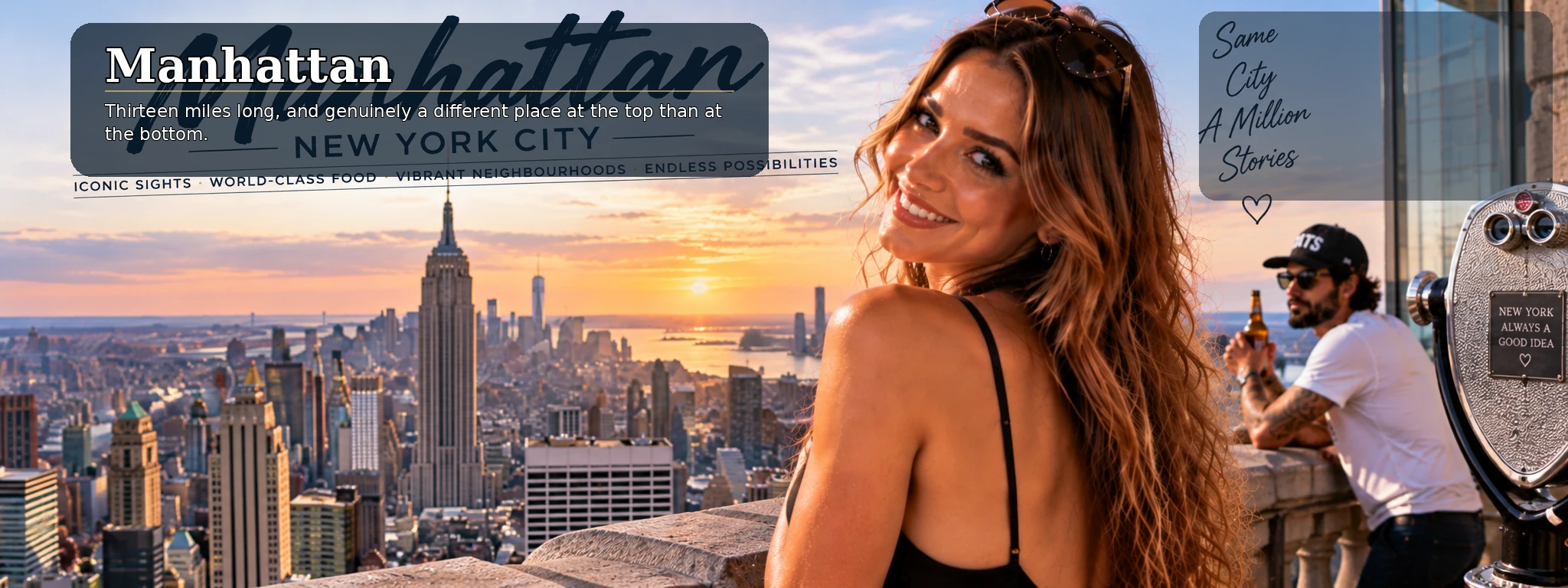
Manhattan is the dense, transit-rich core most first-time visitors picture when they think of New York: Lower Manhattan's historic streets, Midtown's skyscrapers and theatres, Central Park and the museum-lined Upper East and Upper West Sides, then Harlem and the neighbourhoods farther north. You do not need to cover all of it. A better trip comes from choosing two or three zones each day and using the subway between them.
How the island is organised
Above Houston Street, Manhattan becomes easier to read because much of it follows numbered avenues running north-south and numbered streets running east-west. “Uptown” generally means north, “downtown” south and “crosstown” east-west. Below 14th Street, older street patterns make Greenwich Village, SoHo, Chinatown and the Financial District less predictable, so keep a map handy rather than assuming the grid continues.
Lower Manhattan: history, harbour and older streets
For a first visit, Lower Manhattan is strongest when you group the Financial District, 9/11 Memorial area, Battery Park and the Manhattan approach to the Brooklyn Bridge. Nearby Chinatown, the Lower East Side, SoHo, Tribeca and the West Village are better explored on foot, each with a different street pattern and atmosphere. This is a good zone for travellers who want history, architecture, food and neighbourhood wandering rather than only observation decks.
Midtown: easiest for landmarks, busiest for everything else
Midtown contains many high-demand sights: Times Square, Broadway, Grand Central, Rockefeller Center, Fifth Avenue and the Empire State Building. It is convenient but intense. Staying here can make short trips easier because many subway lines converge nearby, while visiting early morning or later evening can reduce the feeling that every pavement is a queue. Treat Times Square as one stop, not the centre of your entire itinerary.
Central Park and the museum sides
Central Park divides the Upper West Side from the Upper East Side. The west is practical for the American Museum of Natural History, Lincoln Center and relaxed residential streets; the east is convenient for the Met, Guggenheim and Museum Mile. If museums are a priority, staying on either side can be calmer than Midtown while still keeping you within a straightforward subway ride of downtown sights.
Harlem and Upper Manhattan
Harlem deserves more than a quick photo stop. It has deep Black cultural, music and civil-rights history, major churches, performance venues and a strong food scene. Farther north, Washington Heights and Inwood feel more residential and offer river views, Fort Tryon Park and a different pace from Midtown. These areas add variety to a longer trip and reward visitors willing to travel beyond the standard sightseeing loop.
Where first-time visitors should base themselves
There is no single best Manhattan neighbourhood. Midtown is efficient for a short landmark-heavy trip; the Upper West Side works well for families and museum visitors; Chelsea and Flatiron balance central location with better neighbourhood texture; the Village suits evenings, dining and walking; Lower Manhattan can be excellent for early harbour starts and newer hotels. Compare the hotel with the nearest useful subway lines, not simply the neighbourhood name.
Subway strategy matters more than distance
Two places that look close on a map can be awkward if they require several transfers, while a longer north-south trip may be fast on an express line. Build days around clusters and use the subway for big jumps. Current MTA fare and OMNY details belong in our getting around guide; check the MTA for service changes before time-critical journeys, especially weekends.
Walking Manhattan without wrecking your day
Walking is one of the best ways to understand Manhattan, but visitors commonly underestimate distances. A neighbourhood day can easily exceed 20,000 steps before dinner. Wear proper shoes, use a subway “reset” when the next area is several dozen blocks away and avoid zig-zagging across the island repeatedly. Our walking New York guide has a practical cluster-first approach.
When Manhattan feels overwhelming
If Midtown crowds are draining you, change the environment rather than abandoning the day. Cross into Central Park, walk the Hudson River Greenway, spend an hour in a residential neighbourhood, or take a ferry. New York becomes easier when you alternate high-intensity attractions with slower streets and parks.
A simple first-trip plan
For three to five days, pair Lower Manhattan with the Brooklyn Bridge; Midtown with Broadway or an observation deck; Central Park with one major museum; and one neighbourhood-focused half-day in Greenwich Village, Harlem, Chinatown or the Lower East Side. This creates a more believable picture of Manhattan than racing between twenty famous pins.
Bottom line
Manhattan is not one experience. It is a chain of neighbourhoods connected by a very good transit network. Pick daily zones, leave room to walk, and let your hotel location and subway access reduce friction. Once you stop treating the whole island as a single sightseeing district, New York becomes much easier to enjoy.